Online course · January to July 2027
Focusing Skills Certificate Course 2027
Learn a gentle and flexible approach to Focusing, with nervous-system regulation woven through every session, designed to work for different profiles (for example, high sensitivity, neurodivergence, trauma and overwhelm), in a small group (max. 7 participants).
Integrative Trauma-sensitive Neurodiversity-affirming Certified by the British Focusing Association
- 60 hours
- 20 weekly sessions
- Online, in English
- 7 participants at most
- Beginners welcome
- BFA certificate included
Group A
Mondays · 17:30–20:30 UK and Irish time
18 January – 28 June 2027
Group B
Fridays · 10:00–13:00 UK and Irish time
22 January – 2 July 2027
€540 if you register and pay by 15 December 2026 · or €600 in five instalments€570 in one payment · or €600 in five instalments
Or experience Focusing first in one session with me (€35)
Registration for Group A has closed. Group B starts on 22 January: you can still register until 21 January.
Registration for both groups has closed. To hear about the next course, join my newsletter.
What Focusing can help with
Many of us learned to push through: to override the tiredness, the dread, the flinch, and get on with it. Or we try to think things through, and go round in circles: thinking can only hold one or two pieces at a time, while the body has a sense of the whole situation. Focusing is a way of turning to that whole sense and letting the next step come from there. It can help, for example:
- when you feel stuck with a decision, a relationship, a creative project or a problem at work;
- when feelings are too much, and you’d like a little space around them, instead of being swept away by them or pushing them away;
- when you want to find out what you really feel or need, beyond what you think you should;
- when you want to keep someone company, as a friend, a parent or a professional, without rushing to fix, advise or judge.
What comes is often small but real: a sense of relief, a new understanding, a next step that feels right for you.
“When you learn how to focus, you will discover that the body finding its own way provides its own answers to many of your problems.”
What Experiential Focusing is
Experiential Focusing, first described by the philosopher Eugene Gendlin, is a way of listening to what you sense but can’t yet put into words. Despite the name, it isn’t about concentrating: it’s a gentle, curious kind of attention. It grew out of Gendlin’s research with the psychologist Carl Rogers: people who benefited most from psychotherapy tended to pause and sense, in their body, something about their situation that was still unclear. Gendlin went on to show that this ability can be learned.
In practice, a session might go like this. You settle, with whatever helps you feel supported. Then you turn towards a situation (for example, a relationship or a creative project), and notice how all of it feels, as a whole, before you have words for it. Gendlin called this a felt sense. You already know it from everyday life: the sense of what you want to say, just before the words come; the nagging feeling that you’ve forgotten something, before you know what it is; the heaviness in your chest when you think of a conversation you keep putting off. You might also turn towards a felt sense that is already there, like an unease you can’t yet explain. Then you keep it company, kindly and without hurry, and let it find expression: a word or phrase, an image, a sound, a gesture or posture, a movement, a drawing. You check what comes against what you feel, and sometimes something shifts: a small easing, a new understanding, a next step. Focusing draws on the intelligence of your whole being, with body, feelings, thoughts and external senses working together, rather than on thinking alone.
In this course you practise offering that company from a resourced place in yourself: a place where you feel supported enough to meet whatever you find with care, curiosity and patience. Some call it the Larger Self; Ann Weiser Cornell calls it Self-in-Presence; I often simply say resourced presence. For one person it feels spacious; for another it feels held, like a weighted blanket. It is a continuous invitation, a journey, an exploration of what helps you access a sense of felt safety and support.
“To work on something bad, it helps to recall what is good, where I am sound. […] my body will work better on what is wrong, if I first let it feel whole and sound, and then turn to what is wrong.”
With a partner, the one focusing can speak, move, draw, stay silent, or do whatever feels right for the inner place they’re accompanying. The companion keeps them company: in silence at first, later by reflecting back what the focuser says, then with gentle reminders (small suggestions the focuser is free to ignore), and finally by offering a short settling practice when the focuser needs one. Being kept company in this way often makes it easier to stay with what you sense.
You don’t need to be good at “feeling your body”. If turning inwards is hard, we can begin with a colour in the room, the support of your chair, a sound, a word, an image or a movement, or simply with the fact that nothing is clear yet. These are all fine ways in, and we build the rest together, step by step, at the pace you need.
Who it’s for
Perhaps you’ll recognise yourself:
- You sense more than you can yet put into words.
- Something in your life already feels good or life-giving, and you’d like to give it more room and let it support you.
- You know that something matters, or that something isn’t right, and you can’t yet say what.
- You often feel on edge, overwhelmed or switched off, and you’d like a gentler way of listening to yourself.
- You’ve tried to think a feeling away, or to exercise or distract it away. That can help, but it’s different when the feeling itself is given room to show what it needs next.
- You’ve been told to “just relax” or “take a deep breath”, and it didn’t help.
- You’ve tried mindfulness or somatic work and found it too fast, too still or too much, or so focused on body sensations that the meaning got lost.
- You listen to other people for a living, and you’re curious about a different kind of listening: one that takes in the whole person, with their body, feelings, thoughts and intuitions, and that you can also offer yourself.
The course is for anyone who wants to learn Experiential Focusing: for their own life, to practise it with a partner, or as a first step towards professional Focusing training, with the British Focusing Association (BFA) or another certification programme. You don’t need a professional background.
It is designed to work for different profiles, so it is also for people who are highly sensitive or neurodivergent (for example, autistic, ADHD), who know trauma or overwhelm from the inside, or who have found other somatic trainings too fast or too much.
If you already know Focusing, the course is a chance to revisit the foundations in a support-first, integrative way, as several experienced focusers did in 2026.
Everyone is welcome. The free call is there to check together that the course fits where you are now, and if you’d like to experience Focusing first, come to a free taster or book one individual session with me (50 minutes, €35).
It is a training course, not psychotherapy: I don’t diagnose or treat medical or mental-health conditions, and the course doesn’t replace psychotherapy.
How we work
1. Support first
The intention is to start with what helps you feel supported or safe enough, and to sustain that sense of felt safety and support throughout the whole Focusing session. It won’t always happen perfectly, and that’s fine: it’s an invitation and a learning journey, not a requirement. Then the harder places can be approached gently, only as far as you choose. “Not today” is always a valid answer. As the focuser, you choose the topic (which can be positive: we don’t have to focus on problems), pace and depth, and never have to tell your story out loud. I often call the space where you feel supported or safe enough the window of support (Organic Intelligence® calls it the “window of enjoyment”). Support can come in many ways: for example, through what you see, hear or touch around you, the chair beneath you, a movement, an image, a memory, a pleasant sensation, a warm feeling.
“The first movement of focusing (and really, every movement of it) depends on having a good feeling as a kind of background in contrast to which the problem is sensed.”
2. Small steps, anchored in support
From Somatic Experiencing® (a body-based approach to stress and trauma) and other trauma- and nervous-system-informed approaches, I bring in three ideas. Resourcing: finding, and coming back to, what supports you. Titration: approaching what is difficult in steps small enough that you can stay anchored in felt safety and support. And pendulation, as I understand it: staying anchored in what supports you while turning towards what is difficult, as much and for as long as feels OK, without losing your footing in felt safety.
We also learn to recognise survival responses (for example, fight or flight, freeze, collapse), the body’s automatic reactions that can leave us on edge or switched off, and what can help when they start to outweigh the sense of being OK, safe and supported. All of this is an intention and a learning journey: it’s perfectly fine if it doesn’t happen at first, or for a while.
3. Silence first, in partnership
As the listener, you start by keeping your partner company in silence; reflections and reminders come gradually. If a reminder doesn’t fit, saying “no, not that” is a success: it means you listened to yourself.
4. Many avenues of sensing and expression
Sensing can start in the body, as is common in Focusing, but it can also start in the mind (for example, a thought, an image) and in your environment (for example, what you see, hear or touch around you); and what you sense can find expression in words, drawing, sound, movement, writing, silence, etc. You are invited to follow what helps the most in that moment, what feels like the right next step. This is what makes the approach integrative: it tries to bring together the avenues of sensing and expression that different Focusing approaches emphasise.
5. You are the authority on your own body
The course is neurodiversity-affirming: differences in how you sense, process and express are welcome as they are, not something to fix, and both the way of doing Focusing and the practical side of taking part in the sessions (moving, the camera, the chat, the pace) can adapt to you. Also, you can share any diagnoses you might have (with me or the group) if you think it might help, although there’s no requirement to do so.
You never need my permission to look after yourself. Sit, stand or lie down; stretch, pace or rock; fidget, doodle or knit; look away, switch your camera off or step out whenever you need to. You can even join from a garden. And if writing is easier than speaking, the chat is always open. If your body needs to move to settle, that is regulation, not distraction.
6. A predictable rhythm
Sessions follow roughly the same order, so you know what’s coming, with room to adapt: welcoming, a lead-in, a check-in, a presentation about the day’s theme with a live demonstration, Q&A, a break, practice in pairs, and time to share and close. See “A typical session”, below.
7. Recordings without you in them
The lead-in, the presentation and the Q&A are recorded with only me on screen, so you can catch up or revisit a theme, and you never appear on the recordings. I repeat each question aloud before answering, and participants’ voices are edited out.
8. One group, start to finish
The same small group for all 60 hours. With at most seven people, everyone has time in every session, and trust has time to grow.
A typical session
Sessions follow roughly this order. The timing, and sometimes the order, adapts to what the group needs.
- Welcoming. We start by simply arriving together: adjusting light, sound and seat, and having what you need nearby.
- Lead-in. I guide 10 to 20 minutes of practices that help us arrive and find support. All of them are ways of regulating the nervous system, through different channels: for example, orienting to the room, pressing into the ground, self-touch, breathing, humming, eye and ear exercises, imagery, or classic Focusing lead-ins such as Clearing a Space. The practices change from week to week, and we often combine several in the same session. This has two intentions, equally important: to give you a repertoire of practices you can use just as they are, in sessions and in daily life, and to help you become more open to what your own body is asking for, with permission to do what it may already have wanted to do, perhaps without knowing it was allowed.
- Check-in. A moment for each of us to say, aloud or in the chat, how we are right now and whatever we need to share before starting, including how the lead-in felt. It is already a Focusing practice in itself: noticing what’s there.
- Presentation and demonstration. I present the day’s theme and give a live demonstration.
- Q&A. Time for questions and clarifications before practice.
- Break. Time to stretch, get water or rest your eyes from the screen.
- Paired practice. The heart of the course. In breakout rooms, one person focuses while the other keeps them company, about 25 minutes each way, with time to set up and to settle afterwards. Partners rotate, and I always join the practice as a participant.
- Closing. We come back together to share what we are taking with us, and close.
The first session is a little different: a longer welcome, and time to agree how we will work together.
Five modules, twenty sessions
Each module has four weekly sessions, with a break week after each of the first four. What you learn at the start is practised and deepened all the way through.
Module 1 · Settling, safety and the nervous system
We begin with the intention behind Gendlin’s first step, “Clearing a Space” (finding the place in you that is fine), and widen it by exploring many ways of finding a resourced place in yourself, something we keep coming back to throughout the course: in every session, the lead-in shows you a different doorway. You practise recognising the body’s survival responses (for example, fight or flight, freeze, collapse) and explore what helps you feel supported and safe enough for Focusing to happen. As a companion, you begin by keeping your partner company in silence.
1What Experiential Focusing is, and the attitude it asks for.
Friendly curiosity, and sitting next to a feeling rather than inside it. Finding support in the room around you and in your senses, a first map of the nervous system, the basic agreements of working in pairs, and the companion’s first skill: keeping a partner company in silence.
2Resources.
Inner and outer anchors of safety; how lying, sitting and standing change what you feel; how another person’s calm presence can help you settle.
3Fight or flight.
Recognising restlessness, urgency or anger; what helps when it takes over; and, as capacity grows, approaching it in small doses while staying anchored in what supports you, so that you can keep it company with care, curiosity and patience.
4Freeze and collapse.
Recognising fog, numbness and stuckness; gentle ways to come back to the present when they take over; why rest is not the same as shutting down; and, when your sense of safety is bigger than the fog, keeping it company in small doses, aiming for a thaw rather than a flood.
Module 2 · The language of the inner world
We explore how a Focusing session naturally unfolds, holding, as much as possible, the intention to remain anchored in felt safety. You’ll discover your own doorways into your felt experience (the external senses, sensations, emotions, behaviour, thoughts…) and your own ways of letting it speak (words, images, sound, gesture, movement, drawing or writing, among others). As a companion, you start offering simple reflections. You are also invited to experiment with presence language: ways of naming what you notice that give it a little room (for example, “there’s something like anger here”, rather than “I’m angry”).
5The flow of a classic Focusing session.
Settling, making contact, letting a felt sense arise, finding the words or images that fit, checking them against what you feel, and receiving what came; and experimenting with presence language.
6Partnership, in more depth.
Its agreements (your time, your privacy, confidentiality), the role of silence, and the companion’s next skill: reflecting back what you hear, perhaps experimenting with presence language.
7Many doorways in.
Felt senses, emotions, sensations, behaviour, the senses, imagination, memory and meaning; what to do when one doorway is blank.
8Expression.
Letting what you sense take form in words, gesture, sound, movement, drawing, writing or whatever feels right for that place in you, and carrying it forward.
Module 3 · The art of gentle companionship
First, you’ll practise guiding yourself. Then, we deepen the companion’s skills: reflections for particular moments (for example, when two sides of you pull in different directions), gentle reminders that the focuser is free to ignore, and offering three classic ways of beginning a session (Clearing a Space, a body scan and a lead-in inspired by Wholebody Focusing).
9Self-guiding.
Offering yourself gentle reminders from a resourced place, so that you can focus on your own.
10Reflections that hold complexity.
Saying the simple truth, keeping a little distance, reminding the focuser of the bigger space, and holding two sides at once with equal warmth.
11Supportive reminders.
Offering a partner a possibility without leading, with cushioning words (“maybe…”, “if it feels right…”), and why a reminder that isn’t taken up is a success.
12Facilitating a lead-in.
Offering a partner one of the three classic ways of beginning a session met over these weeks (Clearing a Space, a body scan and a lead-in inspired by Wholebody Focusing), and bringing the companion’s whole toolkit together.
Module 4 · The inner places that protect us
Trauma and old hurts often leave a place in us that still carries the pain, and others that formed to protect it, through criticising, avoiding, going numb or keeping control. They have protected us, sometimes at a cost. Here they aren’t problems to fix. With enough felt safety and support that survival responses don’t take over, we can stop trying to change or remove these places, and that is often when they (both those that protect and those that hold the hurt) let us know what they need. Nobody is asked to share or go into a memory, and you don’t have to go into these places in your own practice if it doesn’t feel right (for example, if you sense there isn’t enough felt safety available to stay with them without being taken over).
13When something protects something else.
Sensing “the whole thing” from a resourced place, with Kay Hoffmann’s image of your inner world as a meadow with a flock of sheep; capacity first: enough support before anything else.
14Keeping company with the places that protect us.
Criticism, avoidance, numbing, control, anxiety and anger as strategies with good reasons, and what happens when they feel heard.
15The unfolding process.
Protection relaxes when it senses that you are resourced; a gentle rhythm of turning towards the edge of difficulty and widening out to the meadow around it; trusting the body’s direction.
16The journey home.
Only if the protection softens on its own: offering presence to what it was protecting, at the body’s pace, and welcoming back what returns.
Module 5 · Integration into everyday life
We take Focusing out into your life: feeling your way into decisions by “trying on” each option in your body, sensing something larger than yourself (in nature, or however you understand it), and the “revolutionary pause”, a moment of sensing before you answer, so you can stay grounded in conversation. To close, we sense into the whole journey, and into the right next steps for you.
17Decisions.
“Trying on” each option in the body and sensing the response, including “not yet”.
18The bigger space.
Sensing something larger than yourself, in nature or however you understand it, and intuition as felt knowing.
19The revolutionary pause.
Pausing to sense before you answer; a guided conversation in pairs.
20The path forward.
Looking back on the whole journey, free practice, and sensing the right next steps for you.
By the end of the course
You will have practised:
- finding what helps you feel supported, in more than one way, and recognising survival responses (for example, fight or flight, freeze, collapse) in yourself, with what tends to help when they start to take over and make it hard to meet what you feel with care, curiosity and patience;
- listening to yourself in an Experiential Focusing way: pausing, sensing, finding the words, images or gestures that fit, and receiving what comes;
- keeping someone else company, from silent presence to reflections, gentle reminders and offering a lead-in;
- keeping company with what protects you, and with what it protects, without forcing anything;
- bringing the practice into everyday life: decisions, conversations and the wider world;
- starting and keeping up Focusing partnerships, with partners from your group and ways to find new ones.
Dates and times
All sessions are online (Zoom), in English. Each group meets 20 times, with a break week after each of the first four modules. All dates are in 2027, and the times are UK and Irish time.
Group A · Mondays, 17:30–20:30
Module 1
18 Jan · 25 Jan · 1 Feb · 8 Feb
No class on 15 Feb (break week)
Module 2
22 Feb · 1 Mar · 8 Mar · 15 Mar
No class on 22 Mar (break week)
Module 3
29 Mar · 5 Apr · 12 Apr · 19 Apr
No class on 26 Apr (break week)
Module 4
3 May · 10 May · 17 May · 24 May
No class on 31 May (break week)
Module 5
7 Jun · 14 Jun · 21 Jun · 28 Jun
Group B · Fridays, 10:00–13:00
Module 1
22 Jan · 29 Jan · 5 Feb · 12 Feb
No class on 19 Feb (break week)
Module 2
26 Feb · 5 Mar · 12 Mar · 19 Mar
No class on 26 Mar (break week)
Module 3
2 Apr · 9 Apr · 16 Apr · 23 Apr
No class on 30 Apr (break week)
Module 4
7 May · 14 May · 21 May · 28 May
No class on 4 Jun (break week)
Module 5
11 Jun · 18 Jun · 25 Jun · 2 Jul
What time is that where you live?
- Group A: 17:30–20:30 in Lisbon, London and Dublin; 18:30–21:30 in Madrid, Paris and Berlin; 12:30–15:30 in New York and Toronto; 09:30–12:30 in Los Angeles; 14:30–17:30 in São Paulo until 15 March, and 13:30–16:30 from 29 March.
- Group B: 10:00–13:00 in Lisbon, London and Dublin; 11:00–14:00 in Madrid, Paris and Berlin.
One exception: on Monday 15 March, the clocks in New York, Toronto and Los Angeles have already changed and Europe’s haven’t, so Group A runs 13:30–16:30 in New York and Toronto, and 10:30–13:30 in Los Angeles.
Public holidays
Classes go ahead on public holidays:
- Group A: 18 January (Martin Luther King Jr. Day, US), 1 February (St Brigid’s Day, Ireland), 8 February (Carnival Monday, Brazil), 29 March (Easter Monday), 3 May (May bank holiday, UK and Ireland), 17 May (Whit Monday in parts of Europe), 24 May (Victoria Day, Canada) and 7 June (June bank holiday, Ireland).
- Group B: 18 June (Juneteenth, observed, US).
Some break weeks fall on holidays:
- Group A: 15 February (Presidents’ Day in the US, Family Day in parts of Canada) and 31 May (the UK spring bank holiday and US Memorial Day).
- Group B: Good Friday (26 March).
What’s included
- 20 live sessions of 3 hours (60 hours), in a group of at most 7, together for the whole course.
- Paired practice in every session, rotating so that you practise with everyone in the group.
- Nervous-system regulation practices in every session, often more than one, written up in each session’s guide, so you can also use them on your own.
- Recordings of the lead-ins, the presentations and the Q&A, with only me on screen, in your group’s shared folder until 31 December 2027, for catching up or revisiting a theme. You never appear on the recordings.
- Written guides and supplementary reading in the same folder.
- A WhatsApp group for practical messages and reminders.
- Individual 50-minute sessions with me at €35 instead of €70 while the course runs.
- The BFA Focusing Skills Certificate.
- If you’d like, my recommendation for TIFI’s Proficiency in Focusing Partnership Award (see below).
The certificate, and what comes after
When you complete the course, you can receive two kinds of recognition.
1. The BFA Focusing Skills Certificate (automatic)
A British Focusing Association certificate, signed by me, with your name, the dates and the 60 hours, recognising that you have completed the foundational skills training. It is included in the fee, and you receive it automatically once you’ve met the course requirements: all 20 sessions, with up to two missed sessions caught up with the recording and a practice with a partner, and any more made up in a one-to-one session with me (50 minutes, €35).
With it, you can sign up, free of charge, to the BFA’s Partnership Directory and join its WhatsApp group for finding a Focusing partner at short notice. It is also the foundation that BFA Practitioner training asks for (when you can begin is up to your training mentor), and usually more than enough to start professional Focusing training elsewhere, although each programme sets its own requirements. Whether it counts as continuing professional development (CPD) depends on your professional body’s rules.
2. The Proficiency in Focusing Partnership (PFP) Award (optional)
An internationally recognised award from The International Focusing Institute (TIFI), in New York, for proficiency in Focusing, listening and partnership skills. You become eligible for it when you complete the course, but it isn’t automatic: you apply for it if you’d like it.
Its main benefit is that it lets you join TIFI’s Partnership Network, a searchable worldwide directory where you can find other focusers, in many languages and time zones, for free peer exchanges. Focusing is a lifelong practice, and many people find it hard to keep up without a partner.
The course covers the skills the award asks for (listening, felt sensing and partnership experience), so the process is simple:
- Recommendation. At the end of the course, if you’d like the award and I feel you’ve met the necessary skills criteria, I send TIFI a formal recommendation on your behalf, at no extra cost.
- Membership. You become a member of TIFI, which you also need for the Partnership Network. Membership currently starts at US$25 a year.
- Processing fee. You pay TIFI a modest one-time fee to process and post your award. It depends on the country you live in, currently from US$5 to US$35 (for example, US$35 in the US, US$30 in the UK and Ireland, and US$25 in Portugal and Spain).
- The award. TIFI sends the award to me to sign, and I send it on to you.
The award is entirely optional: you are welcome to take the course only for the BFA certificate and your own growth. But if you’d like to practise with partners around the world after the course, it is highly recommended. More about the award on TIFI’s website.
Fee and registration
€540 (about £450 or US$600) in one payment, if you register and pay by 15 December 2026; €570 after that.€570 (about £475 or US$635) in one payment.
Or €600 (about £500 or US$670) in five instalments of €120: the first when you register (it covers the last module), then one in the week before each of modules 1 to 4.
Payments are in euros, from anywhere. The payment methods are in the registration email. If money is tight, write to me.
Registering means committing to the whole course: the group stays together from the first session to the last, and your place in it is held for you for all 20 sessions.
Group size
Each group has at most seven participants and needs at least four to run. Registration stays open until the day before your group starts, or until it is full. As soon as a group reaches four participants, I let everyone know that it’s going ahead. If a group is short, I let you know a week before the first class, and decide two days before whether it runs. If it doesn’t run, you get everything back.
Cancelling
- In your first 14 days. Because you register online, EU consumer law gives you 14 days to cancel. If your group hasn’t started yet, you get everything back; if it has, the sessions already held are deducted (one twentieth of your fee for each).
- After the 14 days. My own policy applies. The first instalment isn’t refunded: it holds your place in a group that stays together from start to finish. If you leave, before or during the course, you simply don’t pay the instalments still to come. If you paid in full, you get back the difference between what you paid and what you would have paid by then on the instalment plan.
How to join
Because Experiential Focusing is relational, we meet before you register.
- Talk to me. Book a free call (about 30 minutes), message me on WhatsApp, or write to me at goncalo.moreira.phd@gmail.com.
- We meet. It isn’t an interview, and it isn’t a guided session: it’s a chance for you to ask anything, get a sense of how I teach, and check together that this is the course you want and that it fits where you are now, since the group stays together for the whole course.
- Register. If we both feel it’s right, I send you a registration email with the fee and payment options, and the terms. You reply “I agree”.
- Pay the first instalment or the full fee. Your place is confirmed when the payment arrives.
Would you like a more experiential sense of what Focusing is before deciding? Book one individual session with me (50 minutes) at the course rate (€35).
Or come to a free online taster (about 2 hours), a shorter version of a real class (welcoming the participants, a lead-in, a check-in, a presentation where I introduce Experiential Focusing, my approach and the course, a moment for questions, a short practice in pairs, and sharing). Monday 23 or 30 November, 17:30–19:30 UK time, or Friday 27 November or 4 December, 10:00–12:00 UK time.Monday 30 November, 17:30–19:30 UK time, or Friday 27 November or 4 December, 10:00–12:00 UK time.Monday 30 November, 17:30–19:30 UK time, or Friday 4 December, 10:00–12:00 UK time.Friday 4 December, 10:00–12:00 UK time. Sign up here.
Monday 23 November
17:30–19:30 UK time
Sign up on Eventbrite: Monday 23 Novemberor sign up on Meetup: Monday 23 NovemberFriday 27 November
10:00–12:00 UK time
Sign up on Eventbrite: Friday 27 Novemberor sign up on Meetup: Friday 27 NovemberMonday 30 November
17:30–19:30 UK time
Sign up on Eventbrite: Monday 30 Novemberor sign up on Meetup: Monday 30 NovemberFriday 4 December
10:00–12:00 UK time
Sign up on Eventbrite: Friday 4 Decemberor sign up on Meetup: Friday 4 December
What you’ll need
- A quiet, private space.
- A computer or tablet with a camera and microphone, and Zoom.
- Headphones, which help with sound.
Optional, and worth having nearby:
- A blanket, cushions and a drink.
- Something to hold or fidget with.
- Coloured pencils, if you like to draw what comes.
- A mat or thick blanket, if you’d like to do the few practices that can be done lying down.
About me
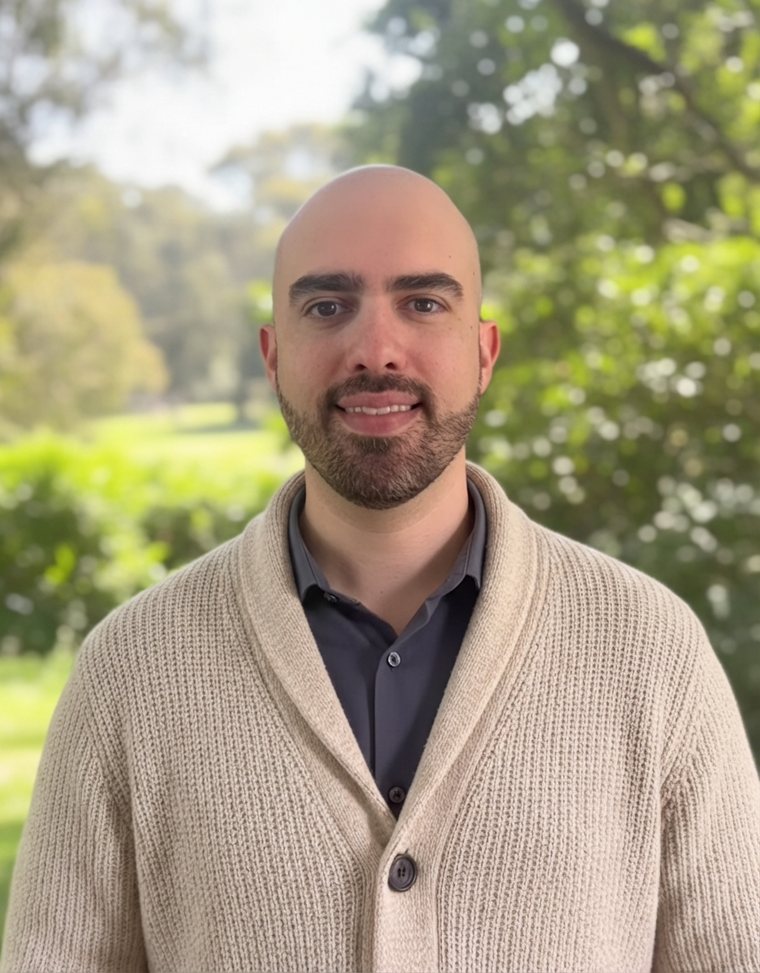
I first learned Experiential Focusing in 2009, with Kay Hoffmann. I came looking for a way to solve problems, and found something deeper: the experience of being truly listened to, without having to fix anything. Over the years, and especially through the challenges of my PhD (six years exploring Focusing as the basis for creating music), it became my compass for finding my next steps.
I am neurodivergent myself, so I know from the inside how differently people can perceive, feel, sense and act, and how often the usual advice to relax or take a deep breath doesn’t work. I built this course as the gentle and flexible container I wish I had had when I started. My own experience informs how I teach; it doesn’t make me assume that anyone else experiences things as I do.
In 2026 I taught the first edition of this course to four small online groups (20 participants, in English and Portuguese), after assisting on Kay Hoffmann’s BFA Focusing Skills Certificate course in 2023. I am especially interested in working with sensitive and neurodivergent people, and in the creative and expressive side of Focusing. Attentive listening and a beginner’s mind are, for me, at the heart of teaching it.
Qualifications
- Focusing Trainer (The International Focusing Institute, 2026) and Focusing Teacher (British Focusing Association, 2026)
- Focusing Professional (TIFI, 2025) and Focusing Practitioner (BFA, 2024)
- Somatic Experiencing® Practitioner (SEP), 2023
- PhD in Musical Sciences (Music Teaching and Psychology), Universidade NOVA de Lisboa, 2025. Thesis: “A Journey of Resonances: Exploring Focusing as the Basis for Music Creation”
- MA in Music Teaching (Jazz Piano), Universidade de Aveiro, 2016
- MA in Music, Performance (Jazz Piano), Universidade de Aveiro, 2013
- BA in Music (Jazz Piano), Escola Superior de Música e Artes do Espetáculo (ESMAE), Porto, 2011
Where it comes from
The course is rooted in Gendlin’s Focusing, with inspiration from Inner Relationship Focusing, Wholebody Focusing, Focusing-Oriented Expressive Arts (FOAT®) and BioSpiritual Focusing. The ways of finding support draw on:
- my Somatic Experiencing® training;
- Organic Intelligence®, with its window of enjoyment and its freedom to start with the world around you rather than always inside;
- occupational therapy;
- nervous-system educators such as Linda Thai, Janae Elisabeth (Trauma Geek) and Justin Sunseri;
- many sources about neurodivergence, which describe the particular challenges neurodivergent people face and the strategies that can help.
Experiential Focusing stays at the centre: this is not a training in those other methods.
Questions you might have
Do I need any previous experience?
No. The course starts from the very beginning. The free call is there to check together that it fits where you are.
I already know Focusing. Is this course for me?
It can be. You revisit the foundations with support first throughout, many avenues of sensing and expression, and companion skills built up step by step, in a small group with rotating partners. If you’re thinking of going further, the BFA certificate is the foundation for BFA Practitioner training, and a good basis for professional Focusing training elsewhere. The free call is a good place to check whether the course fits what you’re looking for.
Can I try Focusing with you before deciding?
Yes: come to a free taster, or book one individual session with me (50 minutes, €35) for a more experiential sense of what Focusing is. Getting to know each other and checking the fit is what the free call is for.
Why is the call necessary?
Because the group stays together from the first session to the last, it matters that this is the course you want and that it fits where you are now. The call is a chance to check that together, and for you to ask anything. It isn’t an interview.
Is this psychotherapy?
No. It is a training course in Experiential Focusing. I don’t diagnose or treat medical or mental-health conditions, and the course doesn’t replace psychotherapy.
Is this like meditation or mindfulness?
There is some overlap: both involve pausing and noticing with kindness. In Focusing, you then turn towards something specific (a situation, a feeling, a felt sense) and give it time to find words, images or movements, and to show what it needs. You don’t need any experience of meditation.
I find it hard to feel my body. Is this for me?
Yes, and you’re not alone. We never insist on turning inwards: you can start from what you see or touch around you, a sound, a word, an image or a movement, and build from there, step by step.
Will this work for me if I’m highly sensitive or neurodivergent?
There is no one right way to take part. You can move, doodle, fidget, use the chat, switch your camera off, look away or step out whenever you need to, without asking, and what you sense can take form in words, drawing, sound or movement. You don’t have to share a diagnosis or your history, although you’re welcome to, with me or the group, if you think it might help. If something practical would help you take part, tell me in the free call, or at any time.
Do I have to keep my camera on, or speak in the group?
The invitation is to keep your camera on, because it helps connection, but you can switch it off whenever you need to. Nobody has to speak in the group: the chat is always open, and when you are the one focusing, you choose the topic, the pace and the depth.
Three hours is long on a screen. Will I manage?
Some people find three hours on a screen long, so each session mixes different kinds of activity: a lead-in, a presentation of the day’s theme with a demonstration, Q&A, a break, about an hour of paired practice, and time to share and close. You can move, doodle, switch your camera off or step out whenever you need to.
Is there work between sessions?
No homework is required, and each session’s materials go into the shared folder for you to read if you want to. Practising with a partner from the group between sessions is strongly recommended: it is where the skills settle, and how people build the partnerships they keep after the course. Arranging it is up to you and your partners.
Are the sessions recorded?
The lead-in, the presentation and the Q&A are recorded with only me on screen, so that you can catch up on a missed session or revisit a theme. You never appear on the recordings: I repeat each question aloud before answering, participants’ voices are edited out, and paired practice and group sharing are never recorded. The recordings stay in your group’s shared folder until 31 December 2027, and are not for downloading or sharing.
What if I miss a session?
Up to two missed sessions are caught up with the recording and a practice with a partner before the next session, at no cost. From the third, each one is made up in a one-to-one session with me (50 minutes, €35) after watching the recording, before the last session of the course. It isn’t possible to join the other group’s session instead.
Does the certificate count as CPD?
That depends on your professional body’s rules. The certificate is signed by me and states your name, the dates and the 60 hours.
How do I pay, and in which currency?
In euros, from anywhere; the payment methods are in the registration email. You can pay in one payment (€540 if you register and pay by 15 December 2026, €570 after that€570), or in five instalments of €120.
What if money is tight?
Write to me. You can pay in five instalments of €120 (the first when you register, then one in the week before each of modules 1 to 4).
How does this course compare with other BFA Focusing Skills courses?
Every BFA teacher covers the same foundational skills in their own way. This one is a single 60-hour course with one small group and one teacher, from the first session to the certificate, with support first, an integrative approach to sensing and expression and neurodiversity-affirming practice running through it: you start with what helps you feel supported, listening to a partner begins in silence, and you decide how much to move, draw, speak or show.
Which language is it taught in?
English. In paired practice you may use your own language when your partner shares it.
Is the course also taught in other languages?
Yes: a Portuguese group on Wednesdays, 18:00–21:00, and a Spanish group on Thursdays, 17:30–20:30 (both UK time, from 20 and 21 January). In Portuguese · In Spanish
How can I continue after the course?
In several ways:
- with Focusing partnerships: with people from your group, through the BFA’s Partnership Directory and WhatsApp group, or through TIFI’s Partnership Network once you have the Proficiency in Focusing Partnership Award;
- with individual sessions;
- if you want to go further, with professional training.
Let’s talk
If you’re curious, the next step is a free call of about 30 minutes. There’s no commitment: we meet, you ask anything, and we see together whether this course is right for you now.
or write to me at goncalo.moreira.phd@gmail.com. If you’d like to experience Focusing first, you can also book one individual session with me (50 minutes, €35).